Autonomy and Robotics

With decades of experience across the autonomy stack, from sensor fusion and perception to human-robot interaction, we enable seamless integration and mission success

Why it matters

Autonomous systems are transforming the battlefield, enabling the DoW to bring mass to the fight, enhance survivability for personnel and assets, and outmaneuver adversaries by complicating their decision-making processes. With over 40 years of RDT&E expertise in advanced autonomy, we lead the development of adaptive and collaborative autonomy solutions across surface, subsurface, ground, air, and space platforms. Our trusted, explainable AI systems ensure reliability and transparency, shifting human-in-the-loop operations to on-the-loop control, supporting diverse human-AI teaming configurations for mission success in unpredictable, comms-compromised environments.

AUVSI-featured-image_SATELLITE

Autonomy and Robotics
Capabilities

Our advanced autonomy capability suite enables both individual platforms and heterogeneous groups of robots to operate seamlessly with human teammates in both commercial and DoW missions. We use probabilistic causal modeling to generate simple explanations of how complex, deep learning machines work, helping humans develop trust in autonomy. From proof-of-concept demonstrations to fielded systems, our solutions are designed to fill critical capability gaps and accelerate the adoption of autonomous systems in everyday operations.

Perception and Situational Awareness

Accurately perceive threats and assess courses of action using passive sensing.

Collaborative Autonomy

Empower your missions with adaptive, intelligent swarms that tackle high-risk tasks, even on extended missions with limited communications.

Human-Robot Interaction (HRI)

Enable shared situational awareness and coordinated task execution with intuitive human-robot teams.

C2 and Decision-Making

Seamlessly integrate autonomous systems into existing command structures with intelligent supervisory C2, adaptive planning, and decision-making tools.

Counter-Uncrewed Systems (C-UxS)

Defend against drone threats with advanced C-UxS, delivering precise detection, tracking, and intelligent threat characterization in real time using passive sensing.

Testing and Evaluation (T&E)

Leverage our proven T&E expertise to refine autonomous systems and human-autonomy interactions, ensuring reliable performance in real-world environments.

Products, platforms, and tools

  • Awarion®
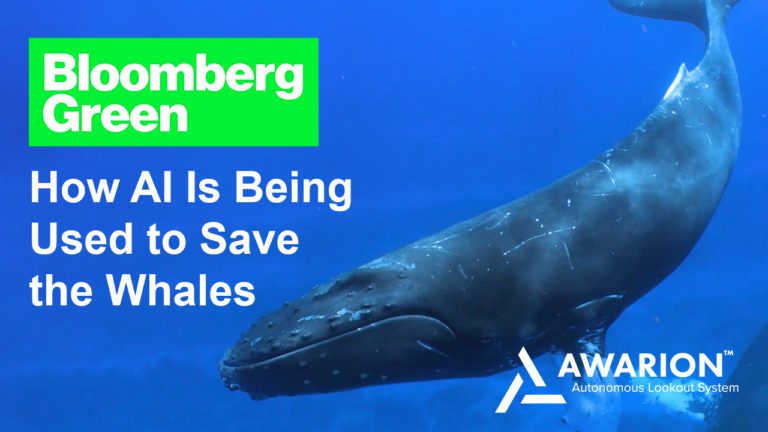
    • The Awarion® Autonomous Lookout System is a passive EO/IR solution delivering 360° situational awareness across domains. It integrates with USVs, UGVs, and UAVs to detect obstacles, track threats, and support navigation and COLREGs compliance. Awarion is camera-agnostic and works with existing or new video feeds for both defense and commercial applications, including marine mammal detection.
  • AutoTRap Onboard®
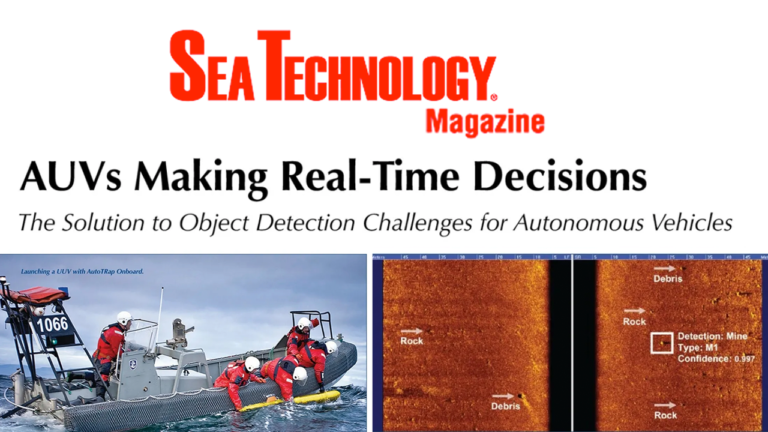
    • The AutoTRap Onboard® automatic target recognition (ATR) app runs onboard UUVs and processes sonar data at the edge, empowering your UAV to act on sonar data in real time, bypassing the time-consuming need for post-mission analysis.
  • PAL 
    • PAL is an innovative human-robot interface that builds trust by interpreting speech, gestures, and gaze using LLMs to reduce uncertainty and enable accurate, collaborative decision-making even in novel situations.
Human instructs robotic arm to grab "that"

Marine Systems T&E

Our dedicated Marine Systems Integration and Test Facility provides year-round access to littoral testing waters at the Point Judith Harbor in Wakefield, Rhode Island.

Since the founding of our Marine Systems facility in 2012, we have refined our expertise in hands-on maritime R&D, specializing in on-water and in-water testing, rapid system integration, and rigorous evaluation in real-world environments. Our configurable workspaces support rapid assembly, integration, and disassembly of large complex systems.

Our team is a cross-disciplinary group of engineers blending deep technical expertise with operational maritime experience, ensuring that our emerging technologies are not just innovative on paper but proven at sea.

We don’t make your UUV—we make your UUV better.

Integrated autonomous capabilities

Our passive, resilient systems seamlessly integrate to reduce operational complexity and vulnerability.

Why Choose
Charles River Analytics

Our multidisciplinary team at Charles River Analytics has led AI R&D for decades, advancing system modeling and hybrid AI reasoning with a foundation in cognitive systems engineering. Our advanced capabilities are transparent and explainable, helping users understand how the system reaches its conclusions. We make complex analytics accessible to operators by emphasizing trust, clarity, and intuitive interfaces.

Advancing research in adaptive autonomy

Our publications highlight Charles River Analytics’ ongoing R&D innovations in autonomy across key domains—situational awareness, navigation and localization, swarm behaviors, and coordinated multi-agent systems. These efforts advance the science of autonomy while ensuring that solutions are explainable, resilient, and effective in mission-critical environments.
Expert voices and media

Our passion for science and engineering drives us to create impactful, actionable solutions.

Explore how our autonomous solutions deliver resilience, enhance collaboration, and seamlessly integrate with new and existing platforms to enable complex operations.

Accurately perceive threats and assess courses of action using passive sensing.

Comprehensive understanding of the operational environment, such as the precise location of threats, is critical for informed decision-making and ensuring safety during complex missions. Our perception capabilities integrate advanced sensor data processing with leading-edge control software to deliver unparalleled situational awareness. Through our multimodal sensing and adaptive intelligence algorithms, we empower operators with the tools needed to make confident, data-driven decisions in dynamic and unpredictable environments. And since our tools are designed to process data at the edge, autonomous systems can remain on task and complete their missions even when faced with degraded comms environments or the need to remain covert.

Across all domains, our detection, tracking, navigation, and localization technologies provide persistent 360° awareness, ensuring that no threat goes unnoticed. Our AI/machine learning systems not only identify and assess potential threats but do so with precision and efficiency, supporting COLREGs compliance for USVs in the maritime domain as well as personnel safety operations for UGVs in ground formations and industrial environments. Whether traversing treacherous terrain, cluttered maritime environments, or contested operational spaces, our technologies ensure reliable navigation and mission success in the most demanding conditions.

The Awarion Autonomous Lookout System guides a ship through a crowded harbor

Perception and Situational Awareness

Empower your missions with adaptive, intelligent swarms that tackle high-risk tasks, even on extended missions with limited communications.

When robots perform high-risk tasks, such as casualty extraction, reconnaissance, or explosive device countermeasures, poor coordination can endanger the personnel that the robots or drones are supposed to protect. Our system components leverage collective intelligence to enable teams or swarms of ground, maritime, space, or airborne platforms to work together effectively, achieving their objectives with precision and reliability, even in degraded-comms environments.

Our adaptive autonomous swarm software empowers teams of robots to dynamically divide tasks, anticipate challenges, and compensate for damage encountered by their robotic teammates. By employing a deep learning, bio-inspired approach, our swarms continuously learn and refine tactics tailored to their unique operational environments. This advanced capability ensures that robotic teams can adapt to evolving mission demands while maintaining resilience and maximizing overall effectiveness.

Collab_Autonomy

Collaborative Autonomy

Enable shared situational awareness and coordinated task execution with intuitive human-robot teams.

Our human-machine interfaces seamlessly integrate robots into a human operator’s workflow, enabling intuitive and efficient collaboration. By leveraging natural interfaces that incorporate advanced speech and gesture recognition, computer vision, NLP, augmented reality, and smart devices, we reduce the cognitive burden on operators while enhancing trust in human-robot teams. These technologies not only improve operational efficiency but also prioritize the safety of warfighters on the battlefield and industrial workers in dangerous environments.

We are advancing the field of explainable AI (XAI) by ensuring that all system outputs are accompanied by accurate, human-understandable reasons, fostering trust and transparency in autonomous systems. Through deep reinforcement learning techniques and causal modeling, our solutions empower human-robot teams to adapt and succeed in dynamic operational scenarios. Our interfaces deliver real-time data analytics and AI-driven insights to enhance human decision-making, enabling intuitive engagement and adaptive learning for mission success.

HRI_Move-Out_V2

Human-Robot Interaction (HRI)

Seamlessly integrate autonomous systems into existing command structures with intelligent supervisory C2, adaptive planning, and decision-making tools.

Our remote command and control (C2), planning, and decision-making capabilities seamlessly integrate autonomous systems into existing C2 structures, ensuring compatibility with hierarchical protocols. By addressing threat assessment, mission execution, multi-agent planning, and task allocation, our tools enable resilient and adaptable autonomous systems to operate effectively, even in dynamic and comms-limited environments.

With decentralized reasoning and real-time model updates, our systems adapt to changing conditions and retask based on unit capabilities and availability. Our Collaborative Autonomy Framework (CAF) ensures dynamic C2 adaptation, while our innovative neuro-symbolic AI combines machine learning with domain-specific knowledge for faster, explainable models. These capabilities enhance collaboration with human planners, enabling more effective, longer-duration plans and deeper analysis, all while preserving human judgment in decision-making.

JET with task plan displayed

C2 and Decision-Making

Defend against drone threats with advanced C-UxS, delivering precise detection, tracking, and intelligent threat characterization in real time using passive sensing.

Our C-UxS technologies excel in detection and tracking from long distances, identifying suspicious behaviors such as high-speed approaches and distinguishing between benign background activity and actual threats. By leveraging modular sensor payloads that fuse electro-optical (EO) and long-wave infrared (LWIR) imagery, our C-UxS solutions provide multi-layer characterization of targets, including platform type (e.g., USVs in the maritime domain, UAS across multiple domains), size, payload presence, orientation, behavioral intent, and friend-or-foe visual cues. With capabilities such as six degrees of freedom (6DoF) pose inference, persistent tracking, and collaborative perception across platforms, our solutions deliver real-time geolocation accuracy and enriched threat characterization.

Our approach to C-UxS surveillance represents a paradigm shift in detecting and responding to threats. By prioritizing passive, AI-enhanced EO/IR sensing over traditional radar or RF-based systems, our solutions reliably identify small, fast-moving drones in terrain-obstructed or signal-denied environments while remaining covert, which is often the downfall of conventional systems.

Counter-Uncrewed-Systems-2

Counter-Uncrewed Systems (C-UxS)

Leverage our proven T&E expertise to refine autonomous systems and human-autonomy interactions, ensuring reliable performance in real-world environments.

We specialize in hands-on maritime RDT&E, offering full-spectrum testing support for UUVs, USVs, ruggedized sensor systems, and custom underwater devices at our on-water facility at Point Judith, Rhode Island. With thousands of hours at sea, our proven approach to in-water testing focuses on rapid technology integration, incremental risk reduction, and validation of critical systems in real-world environments. Our expertise ensures adaptability across autonomy frameworks, enabling compatibility with evolving uncrewed systems. We accelerate innovation by bridging the gap between development and deployment, advancing autonomy, testing new sensors, and refining complex platforms in the environments where they’ll operate.

Our T&E capabilities for human-autonomy interactions are designed to improve safety and enable thoughtful deployment of autonomous technologies by addressing the challenges of integrating AI algorithms with human operators. Our framework emphasizes the importance of evaluating human-in-the-loop processes, providing critical feedback to refine software during iterative design and deployment cycles. By incorporating performance metrics for human-AI interactions as a core design element, we enable software engineers to identify potential issues early in development. This proactive approach ensures that measurable requirements guide the design process, optimizing human-autonomy collaboration and enhancing system reliability.

Marine Systems_on water

Testing and Evaluation (T&E)