Predictive Maintenance and Logistics

From predicting faults in equipment early to planning logistics in contested environments, our advanced AI capabilities help optimize sustainment for mission performance

Why it matters

Traditional maintenance relies on fixed schedules or post-failure reactions, leading to high operational costs, unnecessary maintenance, and avoidable downtime. Our predictive maintenance and logistics capabilities integrate hybrid AI, advanced modeling and simulation, and ecological human-machine interfaces to enable warfighters to anticipate failures and inform the right sustainment action at the right time and place. By linking prognostic health monitoring (PHM) reasoning directly to resource planning, we help ensure that crews, fleets, and supply chains remain ready and resilient, even in contested and resource-constrained environments.

Advanced Predictive Maintenance
and Logistics Capabilities

Our AI-enabled sustainment software services support real-time needs from the tactical edge by connecting distributed and embedded monitoring systems with operational and sustainment decision-making, as well as theater-level planning. These capabilities reduce manual workload, mitigate readiness risks such as extended downtime and production delays, and give commanders expanded optionality for sustaining fleet health and improving mission reliability at sea and on land.

Reliability Engineering Tools

Digital engineering tools and services that connect reliability forecasting to mission effectiveness.

Predictive Logistics Software

Advanced modeling, analytics, and agent-based simulation for supply chain and distribution forecasting even in contested environments.

CBM Prediction and
Inference Engine

Intelligent, on-platform engine that provides advance notification of impending component failures.

Intelligent CBM Workbench

A reconfigurable visual dashboard to monitor, analyze, and address system health and status.

AI Maintenance Aids

Software that processes text and translates technical documentation into on-demand adaptive training content and automates the process of filling out maintenance forms.

Predictive logistics modeling
for maritime and land operations

Our advanced AI software capabilities address critical challenges across reliability, CBM, logistics, and operational readiness.

Expert Voices and Media

Naval Reliability Engineer monitoring status of maintenance systems aboard ship

Advanced predictive maintenance and logistics technologies will enable the Navy to transition from reactive to proactive maintenance strategies.

Read More

A conversation on predictive maintenance, cybersecurity, and decision support in high-stakes defense environments, exploring how explainability, adaptability, and human-centered design underpin the creation of trustworthy AI.

Read More

A conversation on advancing human-AI teaming, highlighting tools that support real-world decision-making and the importance of designing technology that puts people first in defense and civilian applications.
Read More

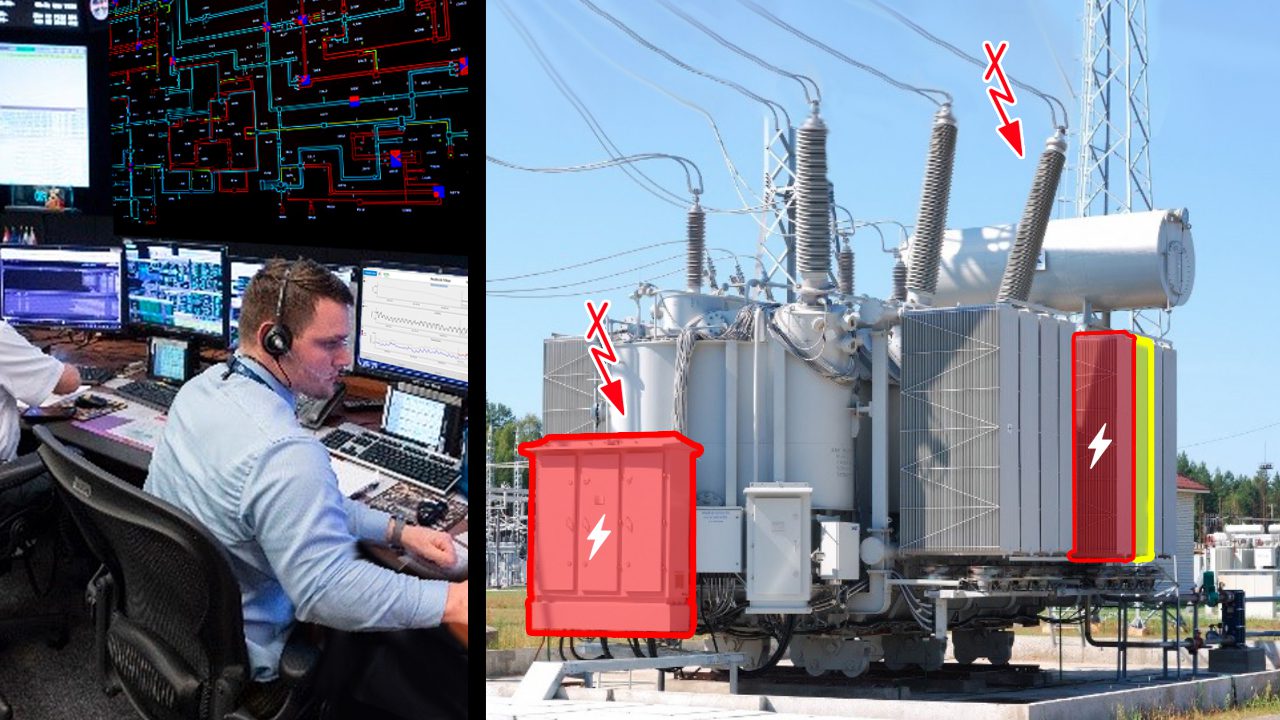
Photo of a electric power transformer on right and control center on left that is monitoring health of transformer

A prognostic and diagnostic application that helps operators maintain reliable power supplies and anticipate future risks.

Read More

Why choose
Charles River Analytics

Our multidisciplinary team at Charles River Analytics has led AI research for decades, advancing system modeling and hybrid AI reasoning with a foundation in cognitive systems engineering. Our advanced capabilities are transparent and explainable, helping users understand how the system reaches its conclusions. We make complex analytics accessible to non-engineers by emphasizing trust, clarity, and intuitive interfaces.

Publications / Advancing Research

Our publications demonstrate how advanced R&D in reliability engineering, predictive analytics, and logistics modeling strengthens mission readiness. From tools that forecast system health to platforms that optimize supply chains, this research highlights Charles River’s commitment to resilient, cost-effective solutions for defense and commercial operations.

In this paper, we present novel research that alleviates this problem by enabling non-AI/ML experts to create and maintain AI/ML applications with minimal guidance from a data scientist.
Read More

In this paper, we present novel research that leverages the power of probabilistic programming and hybrid AI that combines domain knowledge with data to create an effective analytic capability that monitors (in real time) the health and status of a robotic combat vehicle.
Read More

In this paper, we present insights into the importance of predictive maintenance and provide examples of implementation of predictive maintenance in uncrewed platforms such as robotic combat vehicles (RCVs). Moreover, we will discuss how AI techniques rooted in probabilistic models serve as a foundation for predicting health and status of uncrewed platforms.
Read More

In this paper we present Probabilistic Operations Warranted for Energy Reliability Evaluation and Diagnostics (POWERED), a hybrid AI and machine learning tool for diagnosing transformer health and predicting both performance and remaining useful life (RUL) to improve reliability and inform maintenance.
Read More

Our passion for science and engineering drives us to find impactful, actionable solutions.

Explore how predictive maintenance and logistics tools can improve reliability and mission readiness.

Looking to incorporate reliability analysis into early system design?

Our Reliability Engineering Tools connect probabilistic reliability forecasting to real mission outcomes. These digital engineering tools simulate system performance under varying conditions, helping decision-makers anticipate failures, reduce life-cycle costs, and design assets that remain dependable in the most demanding operational environments.

Our Reliability Engineering Tools improve the dependability of complex platforms during design, allowing systems engineers to anticipate failures long before they occur. By integrating reliability forecasting with mission-level analytics, the tools reveal how component choices, system architectures, and environmental stressors affect not only mission success but also availability and life-cycle cost. Engineers can run probabilistic “what-if” trade studies to compare design alternatives under different scenarios directly inside familiar MBSE environments, giving programs the ability to validate design options early and reduce expensive downstream rework.

These tools help organizations design platforms that remain dependable in contested and resource-constrained environments. They decrease the cost of reliability studies while increasing the fidelity of mission modeling and operational availability. The result is a more resilient system design process—one that ties decisions directly to real mission outcomes and empowers stakeholders to deliver higher-confidence systems to the field.

Reliability Engineering Tools

Looking to transform your supply chain risks into a competitive differentiator?

Our Predictive Logistics Software uses transparent, explainable supply-and-demand models to forecast supply chain flows and distribution networks to identify risks before operations are impacted. By connecting asset- and site-level supply and demand models and aggregating across geographic regions, our software ensures that logistical risks can be identified and mitigation plans properly developed and assessed.

Our software combines advanced stock-and-flow modeling, probabilistic forecasting, and agent-based analytics to deliver a clear, end-to-end view of supply chain and logistics expectations down to the source or processing facility level. It anticipates demand, identifies bottlenecks, and highlights vulnerabilities by blending sustainment data with model-driven estimates that fill gaps where data is limited. Users can simulate “what-if” disruptions, test alternative sourcing or routing strategies, and evaluate the impact of decisions on readiness, service levels, and overall network efficiency. Explainable models ensure that forecasts are traceable and defensible—critical for organizations that must justify decisions in high-consequence environments.

For customers with denied, disrupted, or highly dynamic logistics environments, we employ agent-based analytics. Within our software, agents are trained with proprietary deep reinforcement learning (DRL) methods across thousands of simulations to generate operationally valid plans. Running more than 10,000 times faster than state-of-the-art modeling and simulation, the software enables decision-makers to explore a wide range of logistics strategies—testing resupply routes, distribution plans, and sustainment assets at campaign scale.

Our combination of technologies scale from global distribution architectures down to individual sites and platforms. Our software systems highlight risks, reduce costs, and forecast shortfalls and bottlenecks, all while increasing mission readiness and service levels. Our Predictive Logistics Software equips logistics planners with the insight needed to stay ahead of demand, maintain continuous mission readiness, and outpace threats in the toughest environments.

Predictive Logistics Software

Looking to upgrade your platforms with proactive system-health monitoring?

Our Condition-Based Maintenance (CBM) Prediction and Inference Engine encompasses condition-based maintenance at the edge to infer system health and forecast expected downtime by combining real-time diagnostics, hybrid AI–machine learning (ML), and probabilistic programming. Designed for use on platforms, at the edge, and in disconnected environments, it equips operators and maintainers with actionable insights that prevent catastrophic failures and maximize mission availability supporting condition-based operations.

This intelligent engine continuously analyzes sensor data, operational patterns, and system behavior to provide advance notification of lowest replaceable unit (LRU) failures, even with limited or incomplete historical data. Expert maintainer knowledge fills in the data gaps and helps the AI-ML learn with the data it has. The back-end analytics engine uses probabilistic programming to forecast failures and assess risk, enabling crews and maintainers to prioritize critical repairs, extend system life, and sustain mission readiness without unnecessary downtime or wasted resources. By fusing hybrid AI-ML models with probabilistic programming, the engine forecasts degradation trajectories, quantifies risk, and identifies the most likely failure modes long before they impact operations.

Real-time prognostics and diagnostics deliver clear, prioritized insights so crews, depots, and fleet sustainment teams can take the right maintenance actions at the right time, reducing unnecessary downtime and extending system life. The CBM Prediction and Inference Engine runs on commodity hardware and remains fully functional even when disconnected at the edge to keep critical assets in the fight.

CBM Prediction and Inference Engine

Looking to upgrade the efficiency and effectiveness of your sustainment staff?

Our Intelligent CBM Workbench is a flexible human–machine interface (HMI) that transforms complex system health data into clear, actionable guidance. By pairing intuitive visualizations with decision-support recommendations, it enables operators, maintainers, and decision-makers to make faster, higher-confidence decisions with reduced cognitive load whether addressing repairs or making operational readiness assessments.

This workbench visualizes system status, trends, and anomalies in a way that helps operators and maintainers quickly understand what matters and what to do next. By translating raw technical signals into intuitive displays and targeted recommendations, the workbench reduces time to triage issues, minimizes cognitive errors, and supports quick restoration of operations across fleets of ships and ground vehicles. Further, by contextualizing system information in operating conditions and mission usage, our HMI promotes faster communication between maintainers, operators, and decision-makers.

The interface is designed for human–AI teaming, providing users with transparent, explainable insights that calibrate trust and accelerate adoption. It highlights potential problem areas, prioritizes maintenance actions, and prevents unnecessary downtime while reducing “no fault found” events and improving root-cause identification. The Intelligent CBM Workbench elevates the performance of both junior and expert technicians and ensures that technical specialists can be deployed precisely where their expertise is needed most.

Intelligent CBM Workbench

Looking to increase your maintenance staff performance and reduce process friction?

Our AI Maintenance Aids convert manuals, work requests, service history, and expert know-how into interactive, job-specific guidance delivered through mobile, AR/VR, or embedded applications—no internet required. By adapting to each user’s skill level and context, our software accelerates training, improves task accuracy, and decreases time to repair across maintenance environments.

Our AI Maintenance Aids translate complex technical procedures into clear, adaptive instructions tailored to the operator’s role, environment, and knowledge gaps. Whether supporting maintainers on the deck, technicians in the field, or available staff without specialized expertise, our software scales technical proficiency across the workforce and delivers context-rich guidance. Subject matter expertise is captured directly within the system, reducing reliance on a small number of senior maintainers and speeding the onboarding of new technicians. The result is faster task execution, more consistent work quality, and significantly lower error and rework rates.

To further enhance operational efficiency, our AI Maintenance Aids use a text-processing solution powered by edge-enabled generative AI. Our software interprets and revises free-text fields in technical documentation, using best practices to facilitate automated processing by downstream analytics. Employing advanced LLM fine-tuning, prompt-tuning, retrieval-augmented generation (RAG), and chain-of-thought reasoning methods, this capability enables maintenance aids to deliver even more precise and actionable guidance, tailored to the operator’s needs.

By increasing first-time-fix rates, elevating overall maintenance performance, and decreasing overhead required for documentation, our AI Maintenance Aids strengthen readiness and ensure that critical skills are distributed across the staff. The system’s models run offline and remain secure and NIST-compliant.

AI Maintenance Aids